
Get Help with NVivo Qualitative Analysis for a Dissertation From Experts
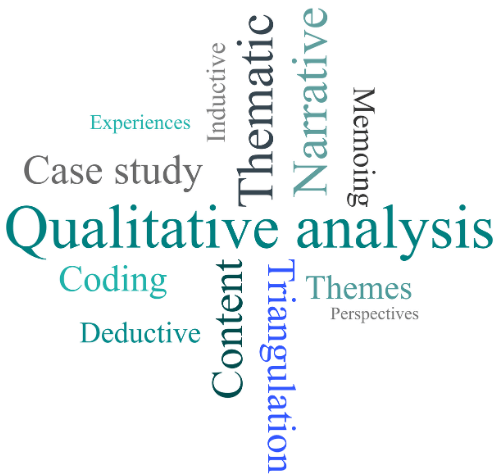
Computer-assisted qualitative data analysis software (CAQDAS) is a program that has been developed to enable researchers to complete various tasks associated with the analysis and interpretation of data. NVivo is one of the leading CAQDAS that is utilized by scholars conducting qualitative dissertations to analyze unstructured text, audio, video, and image data through coding to uncover the underlying reasons behind social phenomena. Might you be searching for help with NVivo qualitative analysis for a dissertation? We are the solution you are looking for, as we assist scholars in different disciplines to analyze, interpret, visualize, and report qualitative data. In this article, we have discussed some of the NVivo qualitative analysis services we provide, such as data cleaning, coding categorization, thematic analysis, results presentation, interpretation, and composing reports.

What is NVivo Used for in Qualitative Research?
NVivo is a software program developed by Qualitative Solutions and Research (QSR) International that is used for sorting, organizing, and analyzing qualitative data. In qualitative research, NVivo can be utilized for various purposes, including but not limited to:
- Managing data. NVivo can be used to organize and keep track of the unstructured data that is typically involved with qualitative studies, including raw data files from interviews, questionnaires, and focus groups, rough notes, and ideas.
- Managing ideas generated in the course of qualitative research. NVivo can be utilized to organize and offer access to the conceptual and theoretical knowledge generated in the course of a qualitative study.
- Querying data. Qualitative researchers can ask questions of the data, and NVivo can retrieve all information relevant to determining an answer to the inquiries.
Are you a PhD student struggling to understand your qualitative dissertation data? You can choose to buy our professional NVivo data analysis services and get accurate results, timely submission, affordable pricing, and free revisions. We also offer dissertation quantitative data analysis using software such as SPSS, Python, R, and Excel, among others.
Some NVivo Data Analysis Services Offered by Our Experts
Students conducting a qualitative dissertation can enlist the services of professional data analysts to ensure that their NVivo tasks are completed accurately and efficiently. With 10+ years of experience in offering professional analysis services with CAQDAS, we understand how to use NVivo for dissertation data analysis. From analyzing interview transcripts and observation notes to focus group discussions, we provide the best NVivo qualitative data analysis services to help scholars understand their data and draw meaningful conclusions. By hiring our professionals, clients can save time that would have been utilized to conduct a personal analysis and focus on other aspects of their research.
When clients reach out to us for help with NVivo qualitative analysis for a dissertation, we follow a systematic procedure that involves:
Step 1: Import Data
Step2: Explore Data
Step 3: Code Data
Step 4: Query Data
Step 5: Visualize and Report Findings
Some of the services we provide for dissertation data analysis with NVivo include:
1. Data Preparation and Cleaning
Data preparation and cleaning involve identifying and correcting errors in raw data sets to improve quality before conducting analysis. Our experts look out for errors in the raw data, from interview transcripts, focus group, observation notes, to open-ended survey responses, and correct the mistakes before analysis. Some of the activities we undertake when cleaning and preparing data include:
i). Evaluating the text for typos and missing information.
ii). De-identifying data to ensure that participants’ personal details are not included.
iii). Comparing transcripts to recordings for accuracy.
iv). Organizing data in a way that allows for a systematic analysis.
v). Removing duplicates.
The foundational step of data cleaning and preparation guarantees the accuracy of the analysis, thus making the qualitative results valid and reliable.
2. Coding Categorization
Coding is a technique in which some aspect of the data is assigned a descriptive label to identify related themes and patterns present in the data. Our professionals categorize excerpts from the client’s qualitative data into meaningful classifications using methods such as descriptive or thematic coding. Based on the client’s data, we utilize inductive and deductive approaches or refine codes over time to build a credible and theory-informed analysis. We construct nodes and subnodes, categorizing data based on key themes and ensuring that our client’s qualitative dissertation is analytically grounded. By coding data in NVivo, we deliver accurate qualitative dissertation data analysis results and decrease bias through consistent code application.
3. Thematic and Content Analysis
Thematic analysis involves identifying recurring themes and patterns within qualitative data to enable understanding of complex phenomena. NVivo is commonly utilized for thematic analysis because it allows for structured coding, the organization of themes, and the integration of memos and notes throughout the qualitative analysis process. Our experts offer help with both inductive and deductive thematic analysis for dissertation data with NVivo to identify significant themes and utilize the recurring patterns to understand people’s views about a certain topic. We utilize diagrams and models to identify and interpret major themes and subthemes and illustrate how they contribute to achieving the client’s research questions and objectives.
Content analysis is an approach that is used for the description and interpretation of textual data. Based on the purpose of the qualitative dissertation research, our experts offer inductive or deductive content analysis services to assist PhD students in identifying, quantifying, and analyzing frequency and relationships or particular words, concepts, and themes in data. We utilize NVivo’s advanced tools for content analysis to determine the latent semantic content in qualitative dissertation data.
4. Results Presentation and Visualization
The dissertation results presentation involves sharing the findings of the qualitative analysis through the key themes that emerged during coding. When presenting the results, key components we include are: theme title, a brief description of what the theme represents, supporting quotes from participants, and frequency or distribution (if applicable). We utilize extracts from data collected through interviews, focus groups, and observations to illustrate where themes are most prominent.
We also offer professional data visualization services in NVivo to enable an easy comprehension of complex phenomena. We use NVivo to create clear and exceptional graphics that are easily understandable, such as network graphs, cluster diagrams, tree maps, and word clouds, among others. By transforming visual and textual qualitative dissertation data into geographical presentations, we support scholars in revealing meanings, patterns, and relationships available in their data.
5. Interpretation and Reporting
Data interpretation usually goes in the dissertation discussion section. Data interpretation involves conducting an in-depth review of the NVivo data analysis findings to provide a meaningful narrative that answers the research questions. We interpret data by highlighting patterns and trends, similarities or differences in responses, relationships between themes, participants’ contrasting views, and unusual responses from the participants. Additionally, we compare the findings to previous literature to highlight the unique contribution of the study and contextualize results.
We also highlight what the findings mean for practice, policy, and future research. Our experts also incorporate reflexivity by acknowledging how personal beliefs and assumptions may shape the analysis to enhance transparency and demonstrate how our values inform and do not bias the interpretation of the participant’s experiences. We compose excellent data analysis reports with each finding directly linked to the research questions and objectives, thus making them ready for inclusion in the qualitative dissertation.
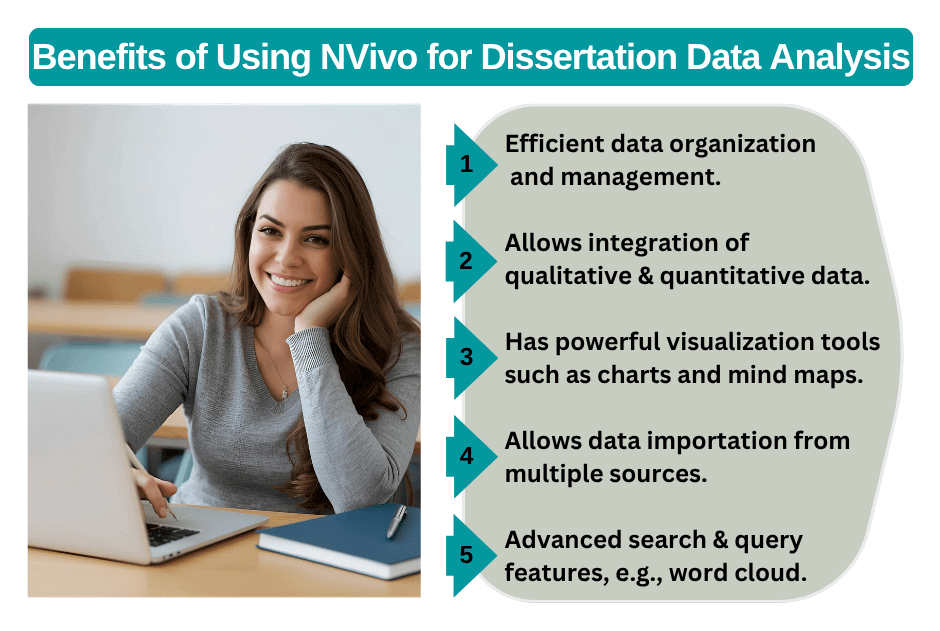
Why Get Help with NVivo Qualitative Analysis for a Dissertation From Us?
Team of Expert Qualitative Analysts
Our team comprises skilled qualitative data analysts who have expert-level proficiency in categorizing, coding, analyzing, and interpreting data. Clients can trust us for excellent custom NVivo data analysis services that fit the highest academic standards.
Round-The-Clock Availability
Our dedicated consultants are available 24/7 to offer instant NVivo qualitative analysis help, whether it’s an inquiry, service-related concern, or revision request. When clients choose our services, they are assured of quick responses and real-time solutions.
Free Revisions Until Final Satisfaction
We offer unlimited free revisions to address any feedback from the client or dissertation committee members until approval.
Timely Delivery
We understand how critical timely delivery is for scholars, so we always complete orders on time, even for dissertations with tight deadlines.
Summary
Selecting the right experts for qualitative data analysis with NVivo for the dissertation determines the success of the research. At our company, we offer professional data analysis services with NVivo to help scholars produce high-quality results. Need to hire an expert for dissertation data analysis with NVivo? Our professionals are readily available to help you analyze your data and derive useful insights. Reach out now and enjoy expert help with NVivo qualitative analysis for a dissertation, timely delivery, excellent customer support, and affordable pricing. You can also join our live chat today to talk to our friendly customer service agents for help with dissertation data analysis, whether qualitative, quantitative, or mixed methods.