
Using NVivo for Thematic Analysis in Qualitative Research: A Guide

Qualitative research plays a crucial role in doctoral studies, particularly in disciplines such as education, social sciences, health sciences, and business research. Unlike quantitative methods that rely on numerical data, qualitative research focuses on understanding experiences, perceptions, and social phenomena through rich textual or visual data. For PhD scholars managing large volumes of qualitative data, software tools can significantly improve the efficiency and rigor of the analysis process.
Among the many qualitative analysis techniques, thematic analysis remains one of the most popular approaches used in PhD dissertations. When supported by specialized tools, the process becomes more systematic and transparent. This article describes the importance of NVivo in qualitative research and how researchers can use NVivo thematic analysis effectively in their dissertations, from data preparation to reporting results.
Understanding NVivo Thematic Analysis
NVivo thematic analysis refers to the use of NVivo software to identify, analyze, and interpret patterns or themes within qualitative data. Thematic analysis allows researchers to organize textual information into meaningful categories that reflect recurring ideas or concepts. These themes help researchers answer research questions and interpret the experiences or perspectives of participants.
In PhD qualitative research, thematic analysis often involves examining interview transcripts, focus group discussions, field notes, or open-ended survey responses. NVivo helps manage a large volume of data by allowing researchers to store, organize, and systematically code data. Instead of manually highlighting text in printed documents, NVivo enables digital coding and easy retrieval of relevant segments.
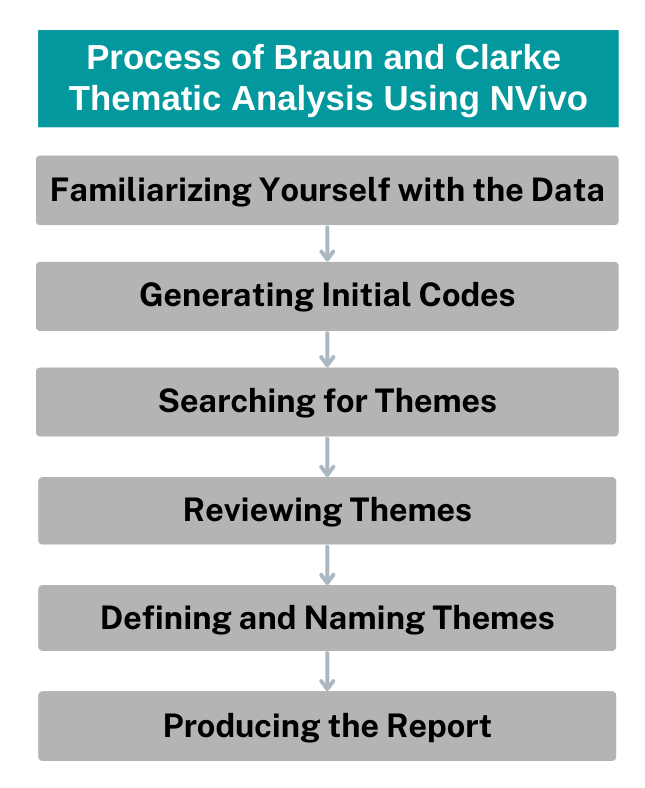
Thematic analysis typically follows several stages: Familiarization with the data, generating initial codes, searching and reviewing themes, defining themes, and reporting findings. NVivo supports each of these steps through features such as coding tools, node structures, and visualization options. In case you need help with data analysis for your research, whether qualitative, quantitative, or mixed methods, reach out to our professionals today.
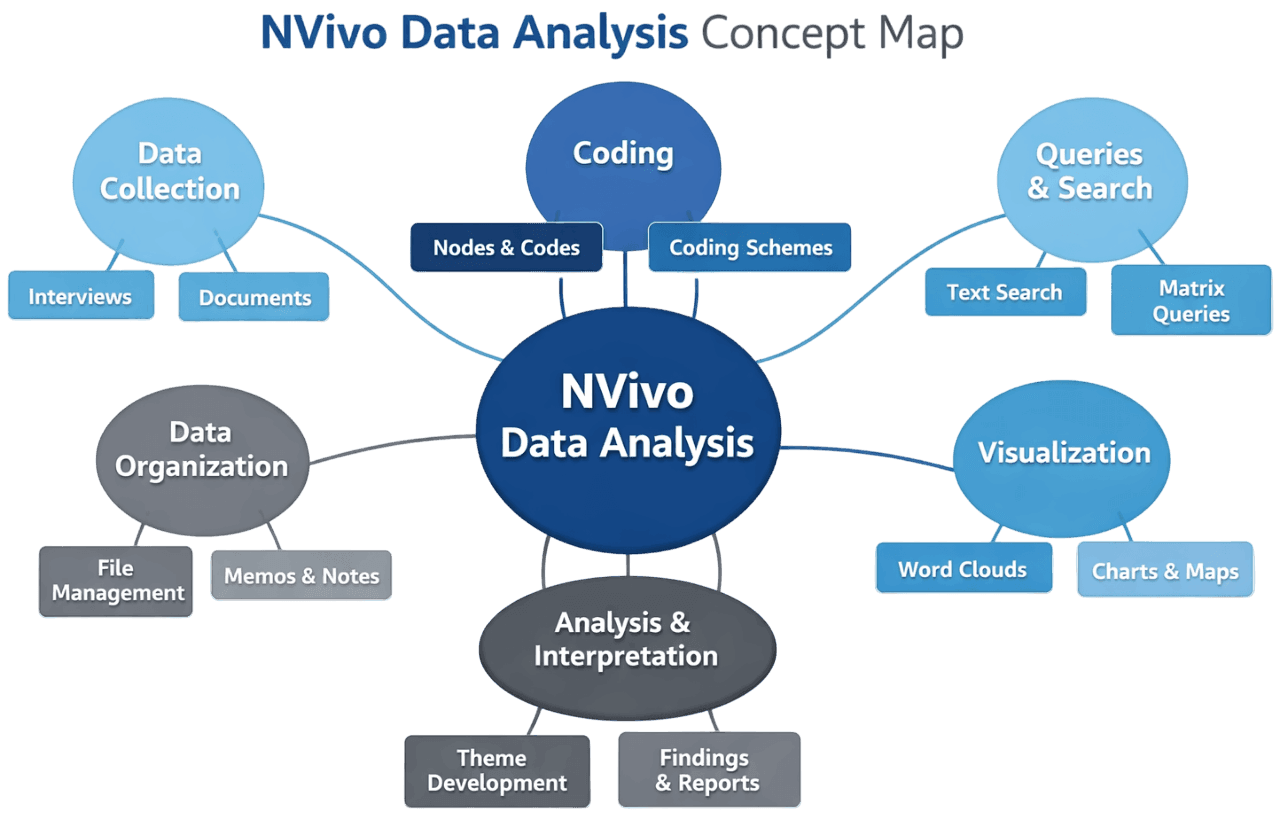
The Importance of NVivo in PhD Qualitative Research
- Management of large qualitative datasets: PhD research often involves extensive qualitative data such as interviews, focus groups, field notes, and documents. NVivo allows researchers to store and organize all research materials within a single project environment.
- Systematic organization of research data: NVivo provides structured tools for organizing qualitative information using folders, cases, and classifications. Researchers can group documents by participant, research site, or data type. Participant attributes such as age, gender, profession, or experience level can also be assigned to facilitate comparison across groups.
- Facilitates coding and theme development: The NVivo software enables researchers to code text, images, or audio segments efficiently. Codes are organized into nodes that represent themes, concepts, or categories identified during analysis, enabling researchers to develop subthemes and main themes.
- Improves efficiency and saves time: Coding and organizing qualitative data manually can be time-consuming. NVivo allows researchers to quickly highlight and code relevant text segments and makes it easy to retrieve all coded segments associated with a particular theme.
- Enhances transparency and research rigor: Maintaining methodological rigor is essential in doctoral research. NVivo allows researchers to track coding decisions and analytical processes. This transparency helps demonstrate the credibility and trustworthiness of research findings.
- Supports collaboration: When multiple researchers are involved in coding and analysis, NVivo enables consistent coding structures and facilitates discussion of emerging themes.
Step-by-Step Process of Conducting NVivo Thematic Analysis in Qualitative Research
1. Preparing Data for Thematic Analysis Using NVivo
Before beginning NVivo analysis, researchers must prepare their qualitative data properly. The first step involves transcribing interviews or focus group recordings into a textual format. Most PhD researchers rely on semi-structured interviews to collect qualitative data, and accurate transcription is crucial for capturing participants’ perspectives and meanings. Once transcripts are completed, they should be reviewed for accuracy and clarity.
Next, researchers import the transcripts into NVivo. The software allows documents to be organized within folders or cases. For example, interview transcripts may be organized by participant group, research site, or demographic characteristics. Researchers should also assign attributes to participants, such as gender, profession, or age group. The researchers should then read and re-read the transcripts to become familiar with the content. This stage of immersion helps identify initial ideas and prepares the researcher for coding.
2. Coding Interviews with NVivo
One of the central steps in thematic analysis is coding, which involves labeling segments of data that relate to specific ideas or concepts. Coding interviews with NVivo allows researchers to systematically organize large amounts of qualitative data. In NVivo, codes are stored in structures known as “nodes.” Each node represents a concept, idea, or theme identified in the data.
When researchers highlight a section of text and assign it to a node, that segment becomes part of the coded dataset. As coding progresses, researchers may create additional nodes or reorganize existing ones. NVivo makes this process flexible, allowing codes to be merged, renamed, or structured hierarchically. This flexibility is especially valuable during the early stages of analysis when themes are still emerging.
3. Identifying and Developing Themes Using NVivo
After coding the data, researchers then identify and develop broader themes that capture patterns within the dataset. Themes are more comprehensive than individual codes. While codes label specific ideas, themes represent overarching concepts that connect multiple codes. For example, codes such as “manager encouragement,” “training opportunities,” and “performance recognition” might collectively form a theme called organizational support.
NVivo provides several tools that help researchers explore relationships among coded data. Researchers can review node contents, compare coded segments, and visualize patterns through charts or diagrams. These features make it easier to refine themes and identify connections between different categories. NVivo allows researchers to reorganize nodes and create hierarchical structures that show relationships among themes and subthemes.
4. Visualizing Qualitative Data in NVivo
Visualization tools are another valuable feature of NVivo. These tools help researchers better understand their data and communicate findings more effectively. For example, NVivo allows researchers to create word clouds that highlight frequently occurring terms in the dataset. This can help identify prominent concepts that may require further investigation.
Another useful tool is the coding matrix query, which enables researchers to compare themes across participant groups. NVivo also supports concept maps and models that illustrate relationships between themes. These visualizations can be included in dissertation chapters to demonstrate how themes connect to the broader research framework.
5. Ensuring Rigor in NVivo-Based Analysis
While qualitative data analysis software such as NVivo enhances efficiency, researchers must still ensure methodological rigor. Software does not perform the analysis automatically; rather, it assists the researcher in organizing and interpreting data. To maintain rigor in PhD qualitative research, scholars should document each step of the analytical process. This includes recording how codes were developed, how themes were refined, and how interpretations were derived from the data.
Researchers should reflect on their own assumptions and potential biases when interpreting qualitative findings. NVivo allows researchers to write memos linked to specific nodes or documents, which can capture reflections and analytical insights throughout the research process. Additionally, peer review or inter-coder reliability checks can strengthen credibility. When multiple researchers code the same data and compare results, the consistency of themes can be evaluated.
6. Reporting NVivo Thematic Results in a Dissertation
The final stage involves presenting the results of the thematic analysis in a clear and structured way within the dissertation. Researchers typically describe the analytical process in the methodology chapter, explaining how NVivo was used to manage and code the data. In the results chapter, themes should be presented systematically, often accompanied by supporting quotations from participants. These quotations provide direct evidence that illustrates each theme. Also, researchers should provide clear explanations of how themes answer the research questions are essential for demonstrating the significance of the study.
Summary
NVivo has become an indispensable tool for doctoral researchers conducting qualitative studies. By supporting data organization, coding, and visualization, NVivo helps scholars manage large datasets and conduct systematic analysis. Through NVivo thematic analysis, researchers can identify meaningful patterns within interviews, focus groups, and other qualitative data sources.
For PhD scholars, learning how to perform coding interviews with NVivo and develop well-structured themes can significantly improve the rigor and clarity of their research. When applied carefully, NVivo not only simplifies the analytical process but also enhances transparency and credibility in qualitative research. Ultimately, integrating NVivo into thematic analysis allows researchers to produce deeper insights and stronger dissertation findings. Need help with NVivo thematic analysis in qualitative research? Reach out to our experts today via live chat to speak with our customer support team, or click here to review how our order process works.